Deconstructed : My Journey Away from the Religion of Christianity
Who am I?
Where did I come from?
Is there a purpose in life?
Preface
What is belief? Is it a level of conviction that something is true?
(“belief” definition - trust, faith, or confidence in someone or something)
Is it synonymous with knowing?
(“know” definition - to be aware of through observation, inquiry, or information)
I would like to state that belief is not knowledge but a particular and unique landing place on a spectrum of certainty. It is almost as if belief is a hypothesis of something before or because it is proven to be true; but humans really must ensure that there is verifiable truth in something that they stake such a large claim in.
I would humbly ask that before you dive into what you may perceive as and what may be a diatribe, to allow for religion itself to rest in the “belief” category instead of something that is “known”.
It begins…

When I was a child, I was taught a particular way to live, which included a construct of ethics, morals and beliefs… this is how most children grow up. The label of religion I was brought up in is called Christianity, which was really just a reformed version of Catholicism, or a general overarching label for the Lutheran, Baptist and non-denominational traditions. When you are a child, you accept pretty much everything as truth; however, as you age, the logical and evolutionary steps should involve analyzing what you were taught and how it sizes up with your experiences, knowledge and reality.
As a young child, I remember figuratively cocking my head sideways to many of the religious practices our family and “tribe” held. Much of it seemed odd to me, but I was content enough to shrug it off and continue along in the charade.
As a teen and young adult, I encountered loads of bizarre Christian behavior that became increasingly troublesome… originally, it just had created angst and a baffled response to the hypocrites in Christianity and to some of the hateful responses that Christians would portray to both their own kind, and to “pagans”.
Why do some people who are raised in a particular religion clutch onto it their entire lives while others are awakened to something outside of it? What is it that makes people question what they are taught and challenge it? I’m not sure I have the answers to the “why”, but I certainly have wandered along in this path…
A common term these days is “deconstruction”, which is the act of taking what one has been taught and how one has lived, and slowly dismantling it to reveal a more natural state that lies beneath; despite being thought of otherwise, this is not some middle-fingered rebellious act but usually one that is birthed after the answers given to life’s burning questions just don’t do it anymore.
I wrote down these thoughts between the ages of 45 and 47. If I haven’t changed and evolved my beliefs over the past 30 years, then I’m wasting my time!
I have come to the conclusion that all religion (e.g. Christianity, Islam, Scientology, Mormonism, Catholicism, etc…) is really just a set of beliefs, laws and concepts that humans arrived at, either originally or as a derivative of another pre-existing religion.
The word iteration is one to be embraced in this particular observation. The Heretic film did an outstanding job of portraying the nature of iterations in the evolution of religions.
For the sake of this particular writing, I’ll focus on the religion of Christianity as that is what I was raised with and the one with which I have the most experience.
Of note, however, is the similarity of religious formation - how many/most of them have the almighty being at the top, the human-version/avatar of this deity, the guidebook, the place you go if you don’t believe, the place you go if you do believe, etc…
Disclaimer
If you know me personally, I realize that what you’ll read here may offend and upset you — I don’t mean it to, honestly. I do hope that it challenges you and you feel free to start asking the big questions in life as I have seen great freedoms in doing so.
If you are yourself a practicing Christian (and I’m referring to the cerebral/belief version, not the one who adopts the way of life), you will likely feel the shock and horror when reading about a Christian who “has lost their way”. You may label me as someone who you thought was saved and is now an “apostate” or “heretic” (again, I grew up in this world, so I know the language and the penalties/consequences conjured up to create “order”), but — this is me.
This is who I am.
And I assure you, this conclusion to that of religion (again, namely Christianity) has not been a flippant one, but instead, one met with years and years of searching, reading, meditating, discussing... to break it down: I read the Bible, over and over, which is the key element that disproved the main tenets of the Christian belief system.
Finally, I know of several others who have also “deconstructed”, but they are too timid to “come out” due to fear of isolation, retribution, judgment and pretty much everything else I myself would have freely given to a defector back when I was in the Christian club. It is sad, and perhaps very telling, to me how a religion that preaches love and acceptance can be so hurtful and judgmental.
If the facts alone don’t discourage belief in Christianity, perhaps a closer look at the fruits of the religion should be considered.
Here are the main “beliefs” that I have walked away from during my 10-12 year period of deconstruction:
Unbelief #1 - Hell and Satan
When teaching my eldest child about the tenets of Christianity, like “salvation” and “Hell” — he challenged and asked deep questions about these topics, which led me to ask myself for the first time — why do I believe what I believe? —and— is it true/can it be proven?
So - despite having perused the Bible my entire life (usually reluctantly), I actually started to read it… like, REALLY read it. Context, authors, translations, commentaries, original Greek, original Hebrew, cultural norms, etc… ALL of this gave me a much different book than the one I had previously encountered.
When I was about 30 (in 2009), in answer to my son’s questions, I spent weeks and months researching the notion of “Hell” and “Satan”, and came up empty; that is to say, coming to a very simple and strong conclusion that these concepts were just propaganda used to create fear and control (and what an effective campaign it had been!).
With this one subject alone, I realized that everything I had been taught regarding this place of horrors was a complete lie — whether or not my “teachers” knew it was a lie isn’t the primary question - I believe that they (the church system I grew up in) still vehemently hold onto these things due to tradition and ignorance, and of course - fear.
Even if the Bible were true and authoritative (which it isn’t — more on this topic later), this promoted concept of “Hell” being a place of eternal damnation for unbelievers is simply not in the Bible.
Also - the same can be said about “Satan” - there is no horned beast, or invisible tempter tickling your ear while he battles for your eternal soul. Welcome to a world of bizarre Bible stories with impossible conclusions and flat-out pagan fairy tales that have conjured up this demon. A Biblical word study on “Satan” and the other invalid monikers also confirms that this is just the stuff of nonsense.
More of my thoughts on this topic, here.
Unbelief #2 - Prayer
Note: I expanded on this topic quite a bit last year but this “Deconstructed” blog contains a summarized version of the topic.
Internal prayer:
Many years before I dropped belief in Hell, I had started suffering with chronic pain conditions that plague me to this day. Unrelenting widespread pain, 24/7; nightly prayer/begging/pleading sessions had become the norm. I’d do anything to get out of pain — why wasn’t God sparing me from this?!? I’d try making deals with God, try living a more moral life, ANYTHING… not to mention all of those (who knew of my affliction) praying for me shortly after that time.
Around 2012, I finally realized that my prayers were quite literally doing nothing… they didn’t change the condition I was in, they frustrated me and they certainly didn’t convince some sort of higher power to heal my disease. I resorted quite confidently to the fact that prayer was not some sort of cosmic vending machine ritual and that… well, that it didn’t do anything. So I stopped. And my frustration stopped. My pain? Oh — that continued, but my mind was at peace with the fact that there wasn’t anyone/anything keeping healing from me because I wasn’t praying the right words or praying enough.
External prayer:
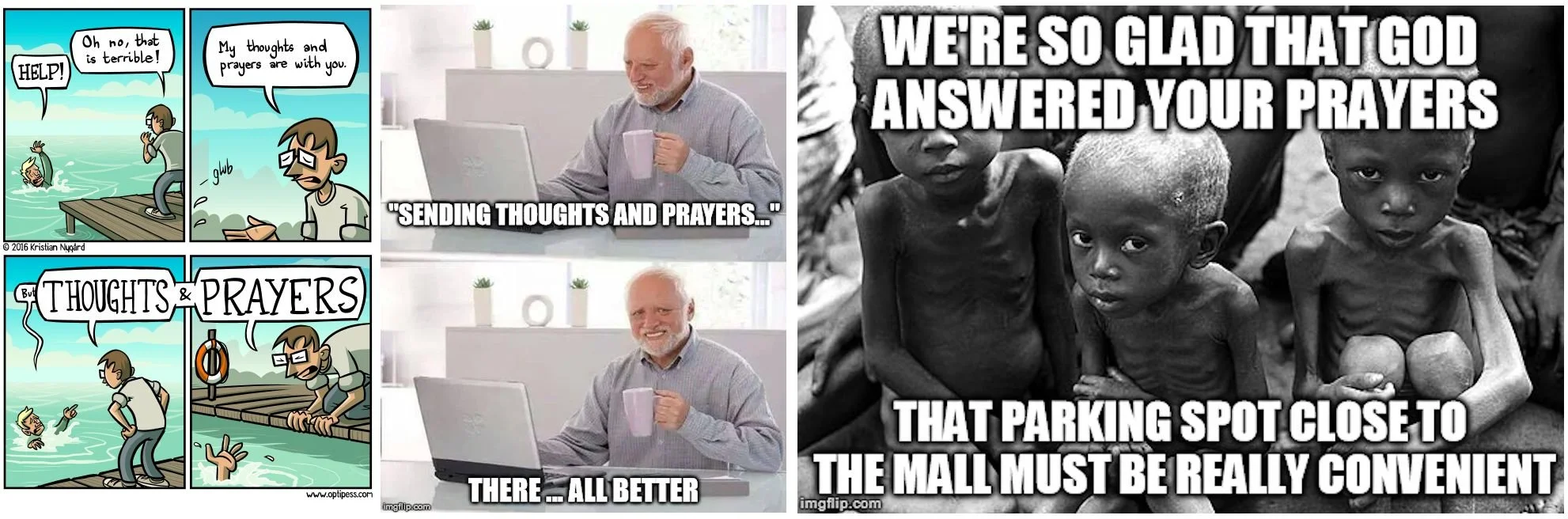
Further growth away from prayer led me to see the insanity of it, arrogantly attributing divine intervention to selfish choices while being blissfully ignorant of those in absolute anguish… the whole “thoughts and prayers” movement further created a distaste for this behavior especially when used as a replacement for actual effective action. Sure, there may be good intentions with prayer, but it is, in effect, a practice that when used during a time of need, doesn’t ever accomplish resolution action for the party/parties in question.
I’ll concede that the act of prayer may help the one praying as a form of meditation, but it doesn’t change any outcome of anything external.
No, prayers aren’t nice at all.
Prayers are dangerous.
Prayers are a way for people to convince themselves they’ve done something, when they’ve actually done nothing.
Prayers seem to absolve people of taking on the responsibility of demanding change.
Prayers pass the buck onto an imaginary being.
Prayers ensure that the problem will persist.
Interestingly enough, studies have been done to actually prove that intercessory prayer does not change any outcome.
Let’s let a few memes explain it - a bit biting, but true:
If you were choking, would you prefer I perform the Heimlich Maneuver or pray for you?
You can only pick one. ;)
The answer should tell you what you truly believe inside.
Unbelief #3 - The Bible as “The Word of God”
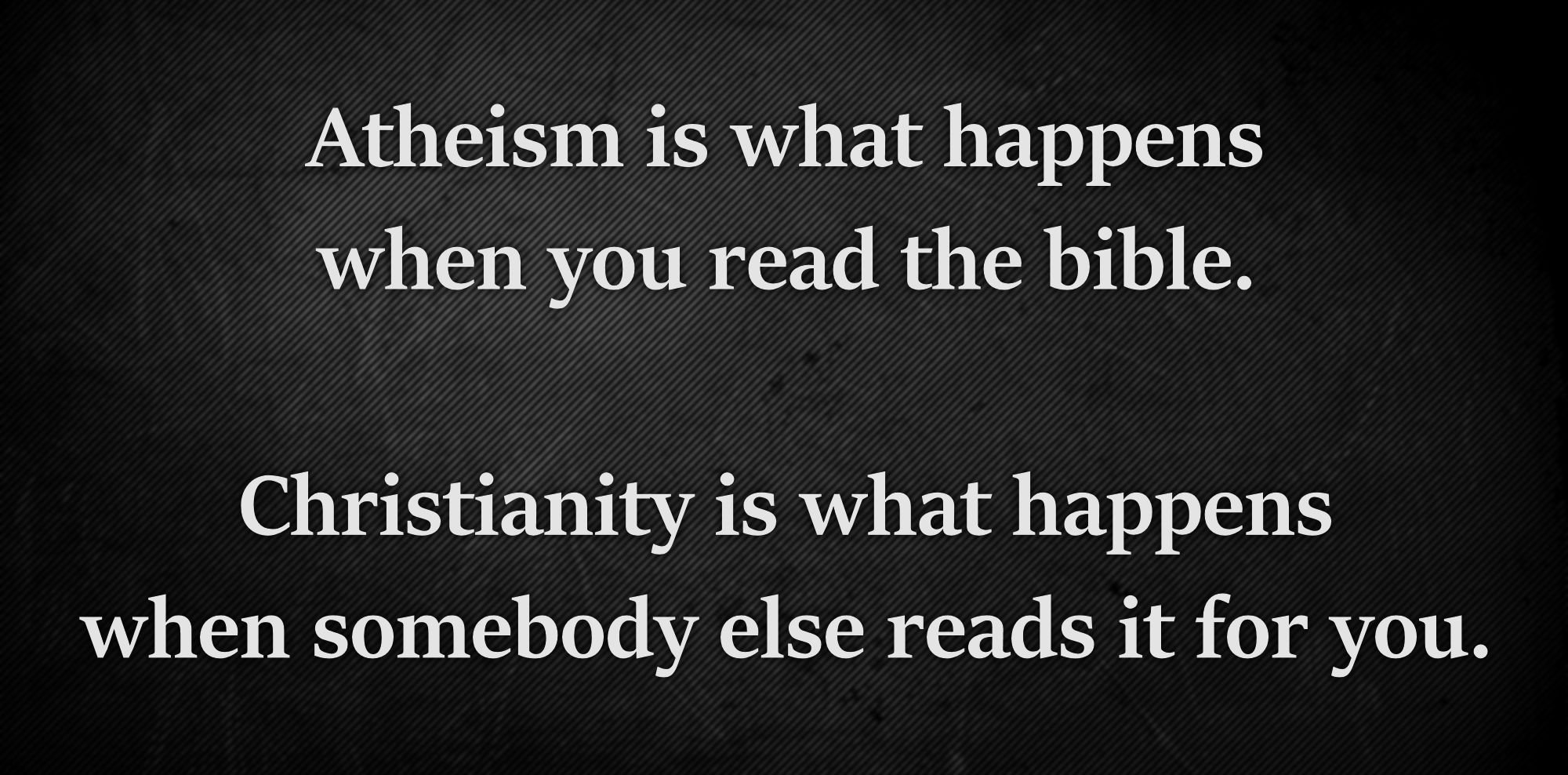
There is no better way to dismantle and deconstruct any religion than spending hours understanding its rulebook. Of course the Bible is widely known in Christianity as being the “Word of God”, as if it were some supernaturally concocted collection of uber-writings that contained the secrets of life. In 2017, as I spent countless months reading it and the aforementioned critical details of the Bible as a whole, what I was left with was something quite different: this was a book written by humans. PERIOD.
This was a book that contained writings that were rewrites of rewrites of scribbles of oral tales and stories, where the majority of the events happened decades before they were written down and for many, the authors are unknown.
This was a book where men very often SAID that “God” was behind their actions, even when many of their actions would be appalling by today’s more evolved standards. Rape, murder, pillaging, sacrifice, theft… so many wicked things done, because… “God wills it”. Or, if you step back a bit and look at it objectively - mankind simply attributed God to anything he wanted to legitimize.
Oddly, the Bible took on a new level of importance to me at this time, but only in its right context. It was a history book of sorts, one where you could see how mankind had indeed evolved and grown, despite the many pitfalls along the way. There is good and there is bad, and we possess the ability to clearly see which is which if we but remove the divine and “inerrant” nature of it all.
The Bible doesn’t claim (in its man-selected 66-book collection) to be any sort of divine book, and even if it DID - that would just create a lovely wheel of circular reasoning (picture an extension cord plugged into itself):
The Bible is the Word of God
BECAUSE
The Bible Tells Us So
BECAUSE
The Bible Is Infallible
If I took the same logic as the Bible’s self-signing authority, then I could write on a sticky note that:
“Paul is God”
+
“Everything Paul says is accurate”
+
“Paul is perfect”.
Those three things would point to each other and then by Christianity’s logic, I would, in fact, be God.
Ludicrous.
More of my thoughts on this topic here.
Unbelief #4 - Jesus as God
I remember being on the road a few years ago, coming off of a long family trip — I had spent a lot of hours thinking about the concept of Jesus, as he is known in Christianity as the Son of God. I think when so many other items are deconstructed in religion, many others rise to the top for analysis - this was one of them.
When I got home, I immediately hit the internet to see if my burning question had any merit - “Did Jesus ever claim to be God?” The answers led me down a rabbit hole that shocked even me despite my already revealing and deconstructing journey.
Learning about the synoptic gospels, how they were just oral stories for decades before someone decided to write something down, how each was a copy of the other, how each had assumed but unknown authors and how John (the last one to be written) was a large departure from the others but still had no direct confirmation of the posed question… the findings were fascinating.
Jesus… was… a revolutionary.
Jesus…was… a man. Jesus never claimed to be God!
(playing the devil’s advocate - even if he did, please see “Unbelief #3 - The Bible as The Word of God”)
Further research of notable Biblical scholars revealed that this was a known and even contested concept that many argued about, even in Christian circles. I was floored… There are loads of resources and publications online, most notably from historian and theologian Bart Ehrman (Moody graduate) on this topic.
Unbelief #5 - Heaven
Despite having already dropped the concept of Hell as some eternal lake of fire for the heathen, I still assumed that we’d at least all get to go (in one way or another) to nirvana in the afterlife.
All of a sudden, I had this thought that horrified me: “If there is no heaven, what in the world happens when we die?!?”
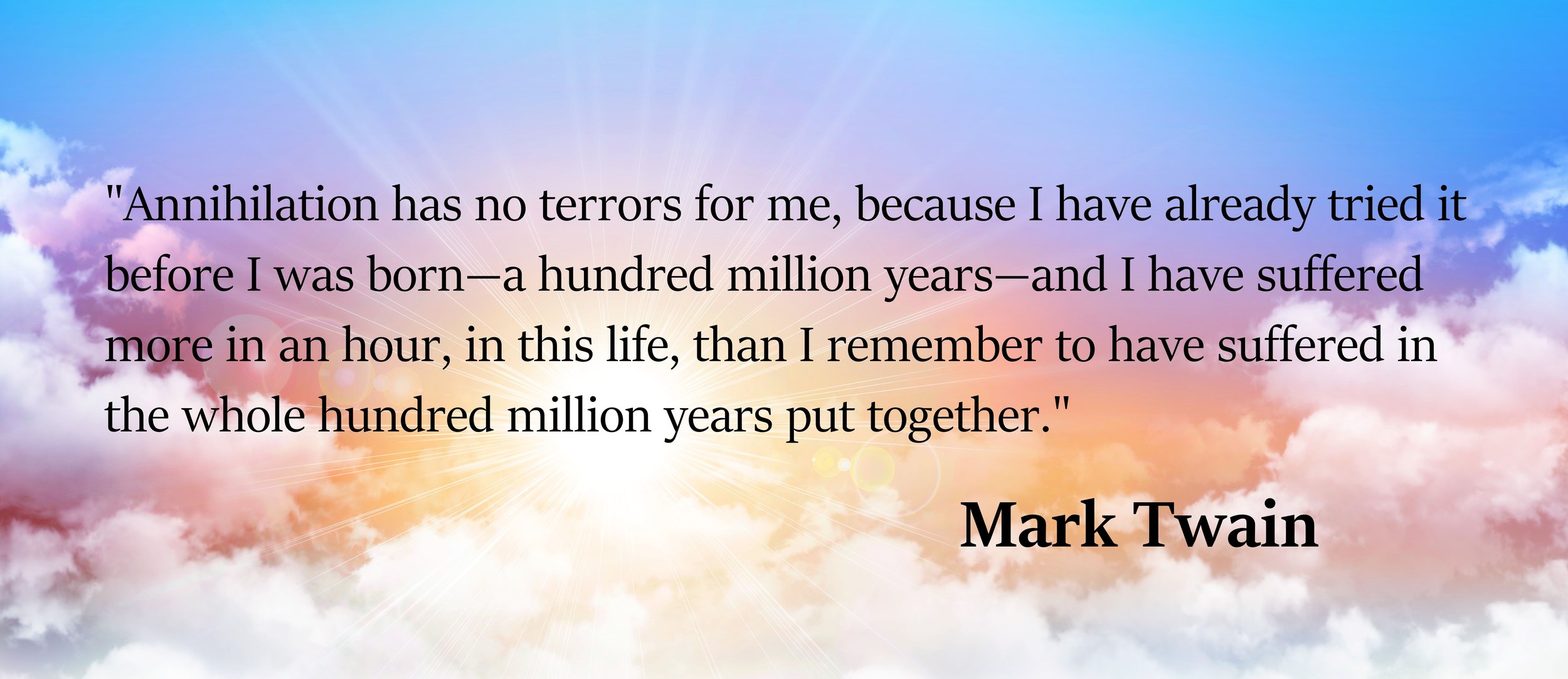
A good friend gave me his tongue-in-cheek reply, which is somewhat a paraphrase of Twain’s quote above.
I don’t remember what I was doing before I was alive, so I’m not too scared of what happens next!
Aside from the Bible never confirming the Christian-held traditional view of heaven, Jesus himself continually taught his followers how to live in THIS life on THIS earth — nothing about a future life “there” — it was all about how to “be here now”.
So, what happens when we die?
Is there an afterlife? Maybe!
When we die, are we just gone? Maybe!
Does our energy/soul get re-absorbed into the atmosphere when we die? Maybe!
Eternal Life not Guaranteed
If I knew for a fact that I had eternal life waiting for me, it’d sure make this life seem paltry and inconsequential now, wouldn’t it?! This is the one life we know we have, and I want to treat it as such! I would go so far as to state that a belief in eternal life will rob you of the joys of THIS life.
Scarcity of an object creates value and appreciation!
But… Could There Be Something More?
I read this several years ago and it stuck with me — the author was discussing life and death:
There is so much beauty and love in this life, that I have to hope and imagine that it doesn’t all just end when we die - otherwise, what was the point?
Live in the unknown and dream a future as big and wild as your imagination takes you!
Either way, I have no fear about whatever is next.
Unbelief #6 - God as a Singular Masculine Deity

When you drop the concepts presented in the Bible, you will eventually land on the last vestige: God.
Such a small (i.e. three letters) and yet powerful word; but so limiting when describing the power or source behind EVERYTHING.
I like the idea of God as “ultimate source” or “power” or “the energy between it all” - I do not, however, embrace the singular deity of a Gandalf-esque masculine being as it just doesn’t have any merit or logic. Sure, it has traditional foundations (again, The Bible), but there is nothing conclusively and absolutely true about that conclusion.
Rant On
The entire concept of the God figure as being male is founded in ancient misunderstandings of how the male is always the life giver in procreation (early humans never understood the woman carrying the egg), so they “naturally” attributed the male gender to the being they thought gave THEM life and existence.
Rant Off
So if God as a singular deity isn’t exactly there, what to do with the things that are happening just below the surface, the relationship between us all, the love that can and does exist between humans, the amazing force behind and within everything…
Is there something more going on here than meets the eye? Absolutely.
Is there an energy and electricity that unites us all and that is pulling us forward? Yes!
Is love the strongest and most beautiful force on this planet? I think so!
Can we master this thing and control it with prayers and bending it to our will? No.
Can we appreciate the awesomeness of it all and continually question it? I hope we do!
In October of 2020, my wife nearly passed away from a miscarriage hemorrhage - it was absolutely terrifying. I thought my wife was going to die - I had to drive 30 minutes behind the ambulance that was carrying my wife, without me knowing if she was even alive. I remember that time distinctly because the concept of a singular and masculine sky-God looking out for her life just quietly drifted away… when we arrived at the hospital, a team of nurses and doctors rushed to stabilize her and breathed life back into her.
There wasn’t a God who saved her.
Humans, who had studied and practiced their very specific arts, saved her, and I was SO thankful.
It was quite apparent that if I hadn’t brought her into the hospital, she would have died.
Because I did bring her into the hospital, she lived.
Life and death can awaken some pretty significant feelings and beliefs — this one quietly let the Christian concept of God drift away in the night.
And it was ok…
After all, if I’m playing the devil’s advocate and “God” had some part to play in her life being saved, it was “God” who was the sadistic being that let it happen in the first place. And I know that isn’t true, because it was her miscarriage that caused the bleeding in the first place. Both the cause and the cure had rational and logical explanations.
So - what do we talk about when we talk about God?
It is such a loaded word and such weight behind it as well as baggage…
There’s something happening, in the midst of all of the tragedy and beauty - something in the vastness of the universe and the intricate smallness of our atoms - an undeniable and massive force of energy and love.
I acknowledge its presence and I choose not to name it, for to name it would be to reduce it to a singular word or definition and it is limitless.
In Summary
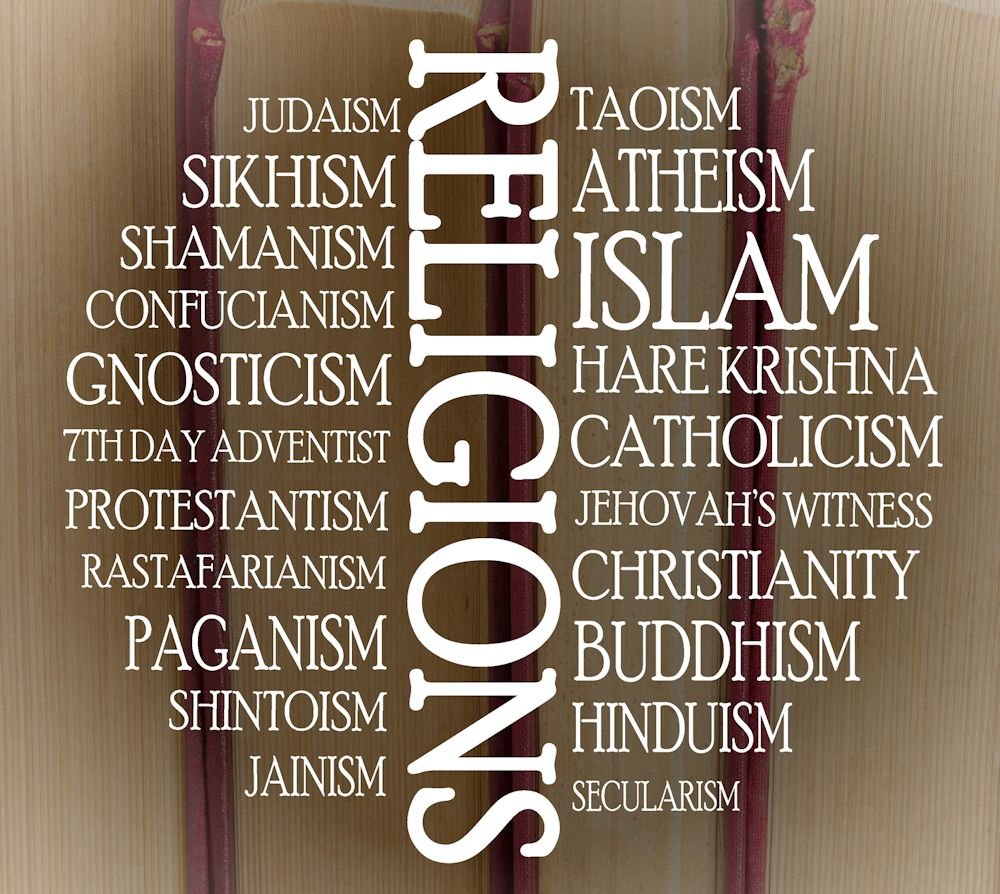
I don’t believe in man-made religions because they are just that:
man-made
Religions aren’t divine, despite each one claiming they are and that every other one isn’t. I cannot possibly believe in them, namely Christianity, because there is nothing even remotely present to authenticate it and prove it.
Circumstantial or fluffy “evidence” (e.g. “feelings”, “self-improvement”, “change of heart”, “doing a 180”) does not have any merit and the exact opposite could be used in this case, rendering it null and void.
In fact, this same life-changing shift, moving from a life of hedonism and narcissism to one of zen and contentment, has literally happened with every religion, practice, or lifestyle choice that pulls one out of a focus on oneself.
Have drug addicts recovered by moving towards Christianity? Yes.
Have they done so by adopting meditation and yoga? Yes.
Have they done so by living a lifestyle congruent with Buddhism? Yes.
I’ve laid out six of the chief pillars of Christianity: Hell and Satan, Prayer, The Bible as The Word of God, Jesus as God, Heaven, God as a Singular Deity. Christianity maintains these as truth, except — none are proven and are pretty much just traditional twisting and gross misinterpretations of old writings.
The primary event that started the dismantling of Christianity for me was to simply read the Bible.
I don’t believe in the religion of Christianity, because I assert that it isn’t true and I have yet to meet a Christian that can prove any facet of it.
And the response of “you just need to have faith” doesn’t hold water because… “faith based on what?”
There is nothing to base the faith on as the objects used to construct it are simply false.
I assert that Christianity isn’t true because there is no evidence at all to support it.
If there is some verifiable truth that exists, it surely has not been provided. Even faith must have something of substance to validate it and substantiate its existence.
It would be a far easier road for me to walk if I had just toed the line and continued on in Christianity, but once you see the truth, you simply cannot unsee - despite billions of followers in a particular religion, popularity is not a good validator.
In closing…
People often ask - without religion, where do your morals come from?
Let me assure you, Christianity wasn’t any sort of safeguard keeping me from committing vile acts — that is true absurdity.
To expand a bit:
Where do my ethics come from?
Well, I like to treat people the way I’d like to be treated - pretty simple!
In fact, you might say that my moral compass is stronger than that of a Christian. A Christian’s main goal of doing “good” is to “please God” or to be “divinely rewarded” or to keep from “angering God”. I just do it because it is objectively good.
What matters in my worldview?
Lots! Some of my driving focuses are: Love, Family, Peace, Growth, Evolution, Community, Science, Romance, Music, Art, Relationship, Nature, Laughter, Work…
Are you an atheist?
I don’t like labels, and I don’t particularly like the “atheist” label as extreme atheists turn their lack of belief into… a religion!
If we must have a label, I prefer an adjective like “agnostic” - as in: “I don’t know” and “I can’t know”.
After all, I was born an “agnostic”, so it only seems fitting. :)

I now love living in the unknown… it was uncomfortable at first but now I find such satisfaction and contentment living in the awe and wonder of it all. Religion claims to answer every one of life’s questions with certainty and rigidity.
It does not allow for change.
It does not allow for evolving.
Having lived well over three decades with the Christian worldview, I can honestly say beyond a shadow of a doubt that I feel like I am truly living for the first time and I’m finding the world and life itself so much more beautiful and amazing than I ever knew!
I have shifted entirely from looking to religion/Christianity to give me meaning in life and I now, instead, create the meaning in my life.